One of the questions we hear often is: How do you decide which dogs go to the Newton Correctional Facility?
Before we get into that, it’s helpful to understand that the dogs in our prison program are typically in Phase 2 of training, generally between 7 and 10 months old. This is a key stage in development, often when adolescence begins and consistency becomes especially important.
It’s a fair question, and the answer is both practical and thoughtful, shaped by the needs of the dogs, the structure of the program, and our goal of preparing each dog for success in serving a veteran.
It Starts with Opportunity
The first factor is simple: how many spots are available. That number can shift from session to session. Over the years, participation at the Newton Correctional Facility has changed. The number of inmates has decreased, and their length of stay has shortened.
Working with Puppy Jake service dogs in training is a privilege within the facility. Inmates must be in good standing to apply, and not everyone who applies is selected. Just like with our dogs, we are looking for the right fit, including attitude, commitment, and the ability to grow in the role. With fewer applicants and multiple job options available inside the facility, we often have fewer handlers than the six spots available.
Then We Look at the Dogs
Once we know how many placements we can make, the focus shifts to the dogs, and this is where things get more complex.
Many of our dogs are entering adolescence during this phase. If you have ever seen the comparison of a sweet puppy turning into a chaotic teenager, you know it is not far from reality. The challenge is that not all dogs show these behaviors at the same time. Some do not fully enter that stage until after Phase 2 has already begun, which means we are often making our best, informed guesses.
Not Every Dog Is a Fit for Prison
The structured environment at the prison is incredibly valuable, but it is not right for every dog.
Dogs that are more timid, for example, need a wide range of social experiences to help us determine whether their behavior is rooted in anxiety or simply a naturally reserved personality. Those experiences are not always possible in a correctional setting. For that reason, dogs who are progressing smoothly with few concerns are typically prioritized for foster homes, where they can continue to build confidence in a more flexible environment.
Matching Structure to Need
For the dogs we are considering, we take a close look at any “red flags.” These might be behavioral challenges, difficulty with focus, or struggles with consistency.
We ask an important question: Can we work through these challenges and still move this dog toward the finish line?
If the answer is no, we begin considering a different path for that dog. In recent years, we have been able to identify these situations earlier, thanks in part to the way our trainers collaborate and address concerns in real time. This means that dogs entering Phase 2 typically have a strong likelihood of becoming either a service dog or a Purposeful Partner (skilled companion).
From there, it becomes about placement, figuring out which environment will best support each dog’s growth.
What the Environment Looks Like
While the prison program offers a highly structured setting, it is also a dog-friendly environment designed to support consistent training.
Dogs live alongside their handlers, with crates set up next to the inmates in the bunk room. Just like other Puppy Jake handlers, those in the prison program have their dogs with them throughout the day when appropriate, moving through designated areas of the facility as part of their routine.
Crating is used thoughtfully, just as it would be in a home environment, and dogs have access to an outdoor space for bathroom breaks and exercise. In many ways, the daily care and expectations mirror what our dogs experience with fosters.
The primary difference is the setting itself. There is no public access. Instead, the environment allows dogs to focus on foundational skills, consistency, and routine without the added layer of outside distractions.
A Real-World Example: Cubby
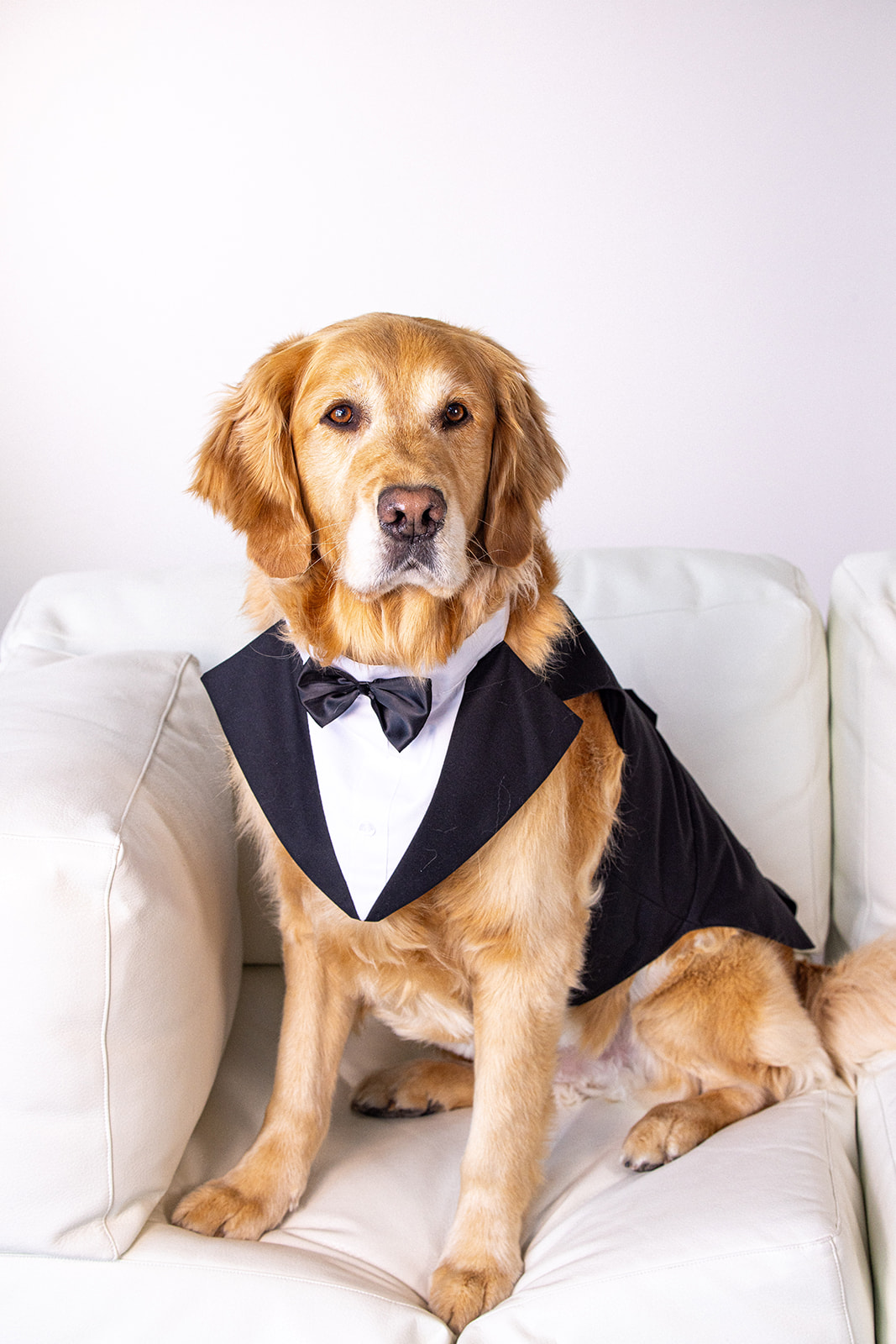
Take Cubby, for example. By all accounts, he is a classic Golden Retriever, smart, eager, and just a little bit wild.
At the start of Phase 2, Cubby was not an ideal candidate for the prison program. He had recently transitioned to a new foster home, and while change is an important part of a service dog’s development, too much change at once can be overwhelming.
Then adolescence hit.
Cubby began pushing boundaries he had not as a puppy, including forgetting some of his house manners. Despite the dedication of his foster family, his energy and impulsiveness increased. Even after neutering, those behaviors did not settle as much as we had hoped.
Meanwhile, Cubby’s brother Charlie was already at the prison, where he was making excellent progress. The consistent routine and reduced distractions helped him stay focused and continue building the skills needed to move to Phase 3 and the Canine Good Citizen (CGC) test.
Based on what we were seeing, Cubby became a strong candidate for the same structured environment, and he recently made the move.
Addressing Common Concerns
We sometimes hear concerns about whether the prison environment might negatively impact a dog. It is an understandable question, especially when people think about the level of structure involved.
Here is what is important to know:
- Adolescence can look different anywhere. Some behaviors that appear in prison would have emerged regardless of location. It is simply part of development.
- Our trainers are actively involved. A Puppy Jake trainer is at the facility every week, working directly with the inmate handlers.
- Communication is ongoing. If questions or concerns arise between sessions, inmates connect with the Corrections Counselor, who then communicates with our team.
- The program meets national standards. Prison-based training programs are common among Assistance Dogs International (ADI) accredited organizations, and ours was thoroughly evaluated during our reaccreditation process.
Most importantly, we are always monitoring each dog’s well-being. If a dog is not thriving, we act.
For example, when we moved Allye from the prison to a foster home, it was because her handler had identified she was not settling in her kennel. This had not been a problem before she was at the prison, and it was not an issue while on furlough. Rather than create a bigger issue, it made sense to bring her out.
So, Which Dogs Go to Prison?
At the end of the day, the answer is this: The ones we believe will thrive in a structured environment.
For some dogs, that structure provides exactly what they need to stay focused, build consistency, and continue progressing through training. And every step forward helps us continue training service dogs for veterans.